
Dubai’s climate is kind of a headache for outdoor structures, you know. Summer days often climb past 40°C, the sun is intense like you can feel it, and near the coast you get humidity that doesn’t really let things dry out easily. Then sometimes there’s that sudden heavy rain that makes everything a bit more complicated, so picking the right tent material is not just “nice to have”; it’s basically needed for durability, comfort, and the life of the whole setup.
If you’re building a tent for an outdoor event, a commercial corner, a vehicle shelter, a warehouse extension, or something industrial, the material choice can change how long it lasts, how often you maintain it, and what it costs later on. Two common contenders are PVC and canvas, but which one actually holds up better in Dubai weather?
Getting the basics right: PVC vs Canvas tent materials
What are PVC tents?
PVC tents are usually made from polyester fabric that’s coated with PVC. This makes a material that is strong, flexible, and weather-resistant, which works well for temporary or semi-permanent outdoor structures. You’ll often see PVC-coated fabric used for industrial shelters, event covers, storage units, parking shades, and commercial canopies.
A big plus with PVC is that it resists water, and it can handle difficult conditions, *as long* as it’s made to proper specs. Because it’s durable and doesn’t demand too much fuss, it tends to be a steady choice for businesses that want long term outdoor protection without constant repairs.
What are canvas tents?
Canvas tents are traditionally woven from cotton or cotton blends. Some modern versions also use polyester or other synthetic fibres, sometimes with protective layers to improve water resistance. Canvas is often praised for breathability and that natural look, so it fits camping, recreational spaces, and some outdoor hospitality uses.
But canvas results are not automatic. It really depends on the fabric blend, the protective treatments, and how well it’s maintained. Natural canvas may need extra care to guard against moisture, mildew, and long exposure to harsh weather.
1. Heat resistance: which one acts better in Dubai?
Heat is one of the biggest deal breakers in Dubai. In summer, outdoor surfaces warm up fast, and the tent material should not start breaking down early just because it gets blasted by sunlight for hours.
PVC tents can do very well outdoors, especially when they’re made with UV-stabilised coatings and materials rated for high temperatures. Still, PVC can get noticeably hot under direct sun—so the fabric alone doesn’t guarantee a cool interior. Ventilation, shade design, and even colour choices matter a lot for reducing heat build-up.
Canvas tents, on the other hand, can feel like they have an edge for breathability, especially with natural fibres. Air can move through the fabric more easily, which may help with ventilation. Yet canvas can also hold onto heat in certain situations. Thickness, colour, and the way it’s constructed changes how it behaves, not only the name “canvas”.
For Dubai, PVC is often the safer long-term option when the tent will be exposed continuously. Canvas can be a fit when breathability really matters. Either way, you still need proper ventilation and a smart structural design; otherwise, the inside will feel like a sauna.
2. Water resistance: rain and humidity protection
Dubai isn’t known as a super wet place all year, but when rain arrives, it can be heavy. Plus, coastal humidity can gradually affect outdoor materials, so water resistance counts.
PVC coated fabric usually wins here, because the PVC layer makes a water-resistant barrier. That helps protect vehicles, equipment, furniture, and stored items from rain. This is why PVC tents show up often in commercial and industrial settings where dependable weather coverage is needed.
Canvas performance depends more on construction and treatment. Natural canvas can soak up moisture unless it’s treated with a water-repellent finish. If it keeps getting wet, the risk of mildew, staining, and fabric wear goes up, particularly if it’s not dried properly after rain. Some newer synthetic canvas products can resist water better, but you still should check the specs before purchase; don’t assume.
Overall, PVC is usually the better bet when rain protection is the priority. But do not ignore the basics like roof slopes, drainage, proper anchoring, and professional installation; those details help prevent pooling water and keep the structure stable.
3. UV resistance and long-term durability
Dubai sunlight is basically relentless, so UV resistance is a key factor in tent selection. Continuous UV exposure can weaken fibres, fade colours, and reduce the service life of outdoor fabrics over time.
PVC tent fabrics can be produced with UV-resistant additives and protective coatings. Higher quality outdoor-rated products can last for long periods, depending on installation, exposure level, and maintenance habits. That’s why PVC is commonly chosen for commercial shelters, industrial storage areas, and outdoor structures that stay in the sun most of the year.
Canvas can also hold up if it’s made with UV-resistant treatments. However, untreated natural fibres tend to fade and deteriorate faster with prolonged harsh sunlight. Fabric weight, weave density, coatings, and the protective treatment all influence the final performance in real life.
For companies wanting to put up more permanent, or at least semi-permanent outdoor structures, UV-stabilised PVC is usually a pretty practical option. Still, before you just go with the material name and call it done, check the manufacturer’s notes…things like UV resistance, temperature tolerance, and what they claim for service life. Otherwise, it’s kind of a guess, not a decision.
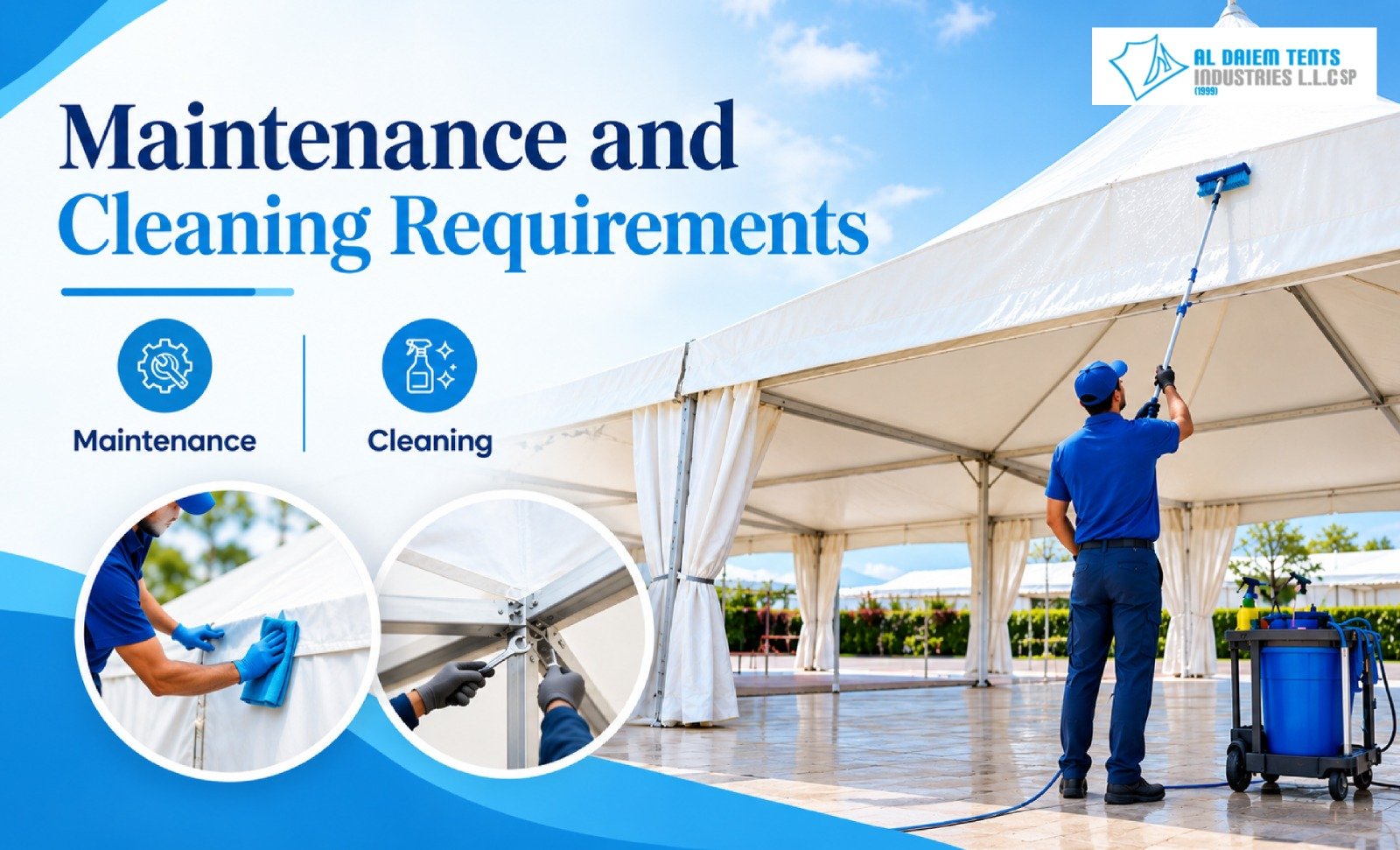
4. Maintenance and Cleaning Requirements
Maintenance is a big deal; it can change operating costs a lot, and it also affects how long the outdoor tent actually lasts. In Dubai, dust and sand seem to move in fast, so regular cleaning becomes important not just for PVC, but for canvas too.
Maintenance is a big deal, it can change operating costs a lot, and it also affects how long the outdoor tent actually lasts. In Dubai, dust and sand seem to move in fast, so regular cleaning becomes important not just for PVC, but for canvas too.
PVC-coated tents are often simple to clean. Most of the time, dust and surface grime can be rinsed off with water, plus a gentle cleaning solution that the maker already approves. Since the surface tends to absorb less, daily upkeep feels easier which can be a real advantage for companies running large outdoor setups, or multiple installations at once.
Canvas tents usually need more attention, and yeah, they’re not always “quick wipe and go”. Depending on the fabric type and its protective treatment, you might need periodic re-waterproofing, careful drying, plus routine checks for mildew, or small tears and wear. Cleaning also has to follow the manufacturer’s exact guidance, because being too aggressive can damage fibres or mess with the protective coating layer.
Overall, PVC tends to be easier to maintain, so it often looks appealing for businesses trying to reduce routine hassle. That said, both materials still need regular inspections, quick repairs, and proper storage when the structure is not being used.
5. Cost: Initial Investment vs Long-Term Value
The “cheapest” tent is not always the cheapest decision long term. When you compare PVC versus canvas, don’t just look at what you pay upfront. You also need to include maintenance, potential repairs, installation effort, and the expected service life.
In some cases, canvas tents start with a lower price for certain uses, though premium canvas products can get expensive fast. Whether they’re really worth it depends on what you’re using them for, the protective treatments applied, and how often you’re willing to handle maintenance. They can work well for recreation, hospitality, or any setting where appearance and breathability matter.
PVC tents can demand a bigger upfront investment, especially for heavy-duty, reinforced systems. But water resistance, strength, and the easier upkeep can make them more cost-effective for regular commercial use. Don’t forget to add in the supporting frame, anchoring, installation, cleaning needs, and how often replacement may be required.
For commercial sites that get regular outdoor exposure, PVC often provides solid long-term value. Canvas can still be a good match for lighter-duty uses, or recreational needs, when its special advantages truly justify the extra care.
PVC vs Canvas Tents: Which One Should You Choose?
Your best pick really depends on how and where the tent will operate. PVC tents are usually a strong fit for commercial events, industrial storage, protecting vehicles, outdoor workspaces, and semi-permanent structures. If you choose PVC, look for UV-stabilised fabric, reinforced seams, temperature ratings that actually match the local climate, and a support system that’s designed properly—not just assembled.
Canvas tents might be better for camping, recreational spaces, and hospitality areas where breathability and a more natural aesthetic are key. Just make sure the canvas is suitable for the local sun exposure, and that the water-resistant treatment is the right one for your use case.
For both options, try to think about the whole structure, not only the fabric. Roof design, airflow, structural strength, drainage, anchoring, and any relevant fire-safety standards all affect how well it performs. A good, experienced tent supplier can help you choose something that matches your site conditions and intended function.
Final Thoughts
When comparing PVC vs canvas tents in Dubai’s climate, PVC is generally the more practical choice for commercial and industrial applications that need dependable water resistance, easier maintenance, and consistent outdoor durability. Canvas stays a viable alternative for situations where breathability, appearance, and comfort for leisure are the priorities.
In the end, the decision comes down to your specific requirements, the quality of the material, and how the structure will be installed and maintained. If you’re planning an outdoor shelter, event tent, or industrial canopy in Dubai, it’s smart to speak with an experienced tent and tensile-structure specialist. They can review your site, your intended use, and the local weather conditions before you commit your budget.
Picking the right material from the start can improve performance, reduce maintenance workload, and help protect your investment for years, not just months.
